
This Billion Dollar Discipline Improves Everything
Posted in Career Search Tools & Education, Dynamic Training News, Improve Sales & Profits, Latest Leadership Posts, Performance Management, Talent Development & Training on Apr 14,2026
Whatever you do – professionally or for fun – will always be defined by your last performance. Why should you settle for good enough when great is readily available? Here’s the billion-dollar secret that the best performers in every profession, sport, activity, project, and task, use to get better, reach the top, and accomplish new heights.
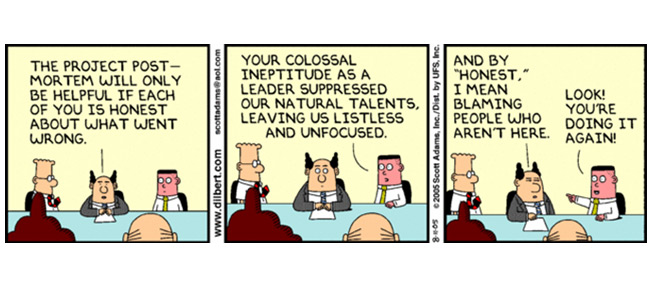
Following the completion of anything worth doing, a billion-dollar best practice is to perform a postmortem.

What’s a postmortem? It is a Latin medical term meaning “after death” that involves examining a body to understand more fully what caused the body’s death. The TV series CSI (Jerry Bruckheimer and CBS Television) gave us an inside look at how forensic science enabled the CSI team to determine exactly what happened at the crime scene. The findings helped the police to solve the case and assure a better future outcome.
Postmortems Help You Improve Subsequent Performances
Everything worth doing that will be subsequently done again will benefit from a postmortem to uncover:
- What went well and why (things we want to repeat next time),
- What didn’t go as well as desired and why (things we don’t want to repeat), and
- What we should do differently the next time (our key learnings).
Projects. Sales. Meetings. Presentations. Interviews. Marketing. Product design. Production. Service delivery. Websites. From the simple to the complex and everything in between.
While the most important perspective will be the assessment by those who are impacted by what was done (such as customers, interviewers, and people down the supply chain), it is highly instructive to objectively and candidly evaluate how you did during each stage of what was done. It is possible that your prospects, interviewers, project team members, and customers may tell you what you did and did not do well, but that is not the norm. The best feedback you get from them may be their body language during a meeting, and the messaging it sent.
Mastering anything, from a job interview to managing people to selling solutions, will be a series of progressive realizations and learnings coupled with continuous improvement, and the postmortem process is the most organized and efficient way to drive this.
Break Down the Process
As part of your pre-performance or activity planning, consider the factors and actions that will make what you do successful. Since planning is the thinking that precedes the work, what specific steps or actions do you want to take to optimize your results?
For example, in a job interview or sales presentation, such factors could include the quality of your preparation and research; a timely arrival; making an appropriate appearance that adds to your credibility; a strong introduction that builds rapport and trust; your use of active listening skills; modeling effective body language; clear and concise answers; an effective use of proof documents; a good summary; and an agreement of next steps.
- Additional sales factors might include the quality of your needs assessment and its ability to expose the prospects circumstances, motivation, and points of pain; presenting solutions tailored to uncovered needs; your observation of their buying signals; how effectively you identified and handled points of resistance; and how well you tied your solution’s features to benefits that mattered to your customer.
- Additional job interview factors could include how effectively you utilized examples to support your answers; how well you handled the deeper, probing questions; your tone and demeanor during the least enjoyable parts of the interview, and your use of pre-interview research that demonstrated a deep level of understanding of both the employer and your interviewers.
Ask Yourself the Right Questions
Write down all of the appropriate factors you’d like to assess in your postmortem, and where they fit into what you are evaluating. A good list will assess twelve to fifteen areas. Then answer these three questions about EACH area as candidly as possible:
- In this area, what things went as well or better than I wanted? These are the things you’ll want to replicate in future meetings.
- In this area, what didn’t go as well as I would have liked…and why not? This will expose the greatest opportunities for you to improve next time.
- What specific changes do I need to make for next time? This is the heart of your postmortem, and where you’ll need to be specific. Don’t just say that you need to improve your body language…WHAT SPECIFICALLY needs to change to improve?
Why Postmortems Are a Billion Dollar Discipline
Here’s a little secret. Few people will be diligent in spending the time and effort required to perform a detailed postmortem. A quick two-minute reflection won’t move the needle much on making the changes necessary to vault you into the top performance tier. Your investment of time may seem high now, but in two or three cycles you will see dramatic improvements in what you accomplish.
Bottom Line
Your diligence in performing detailed and thoughtful postmortems will accelerate your mastery of the process and set you above the vast majority of people with whom you will compete for a job, sales, market share, presentation, and any worthwhile performance.
About me: Since founding Boyer Management Group 28 years ago, I’ve been blessed to work with some of the world’s top employers by helping them get the most out of their talented people. Thanks to our clients, the company I founded in 1998, Boyer Management Group, was recognized by CEO Monthly Magazine in 2023, 2024, and again in 2025, awarding us their “Most Influential CEO Award” in the executive coaching field. C-Suite Insider named me its 2024 CEO of the Year for Executive Coaching. Our coaching programs produce remarkable results in compressed periods of time. Our extensive leadership development course catalog provides effective skills-building for everyone in the organization, from the new and developing leader to the seasoned C-level executive. BMG boasts one of the most extensive sales and sales management curriculums anywhere, with behavioral assessments to help develop talent. To find out more, please visit us at www.boyermanagement.com or email us at info@boyermanagement.com.


Latest Leadership Posts
Effective People Live the Goldilocks Principles Continue Reading
Don’t Be That Guy Continue Reading
How to Hire the RIGHT Sales Talent – Part 1 Continue Reading

