
Stress: A Worldwide Epidemic in 2026

Posted in Assessments & Evaluations, Dynamic Training News, Latest Leadership Posts, Leadership Development & Training, Performance Management, Talent Development & Training on Jan 06,2026
Maybe you can relate to this.
One day I asked my boss, Denny B. how he knew the workload his managers could handle. Denny was wise, wiser than me, and had been managing for almost a decade. He had done a fantastic job for the past three years leading a territory of 34 managers and – scary thought – I was about to replace him.
Denny thought for a second and then said, “You’re inheriting a really solid team. They can handle the challenge. I don’t pay much attention to a little complaining over the workload. That’s normal. I only get concerned when I hear snaping and popping sounds.” That was Dennyspeak for stress.
About a month later I was about to learn an object lesson in stress… the snapping and popping sounds were coming from me. And I did not handle it well. I let the people I work with see me a strssful mess not coping positively with the challenges I faced.
Stress is a Wordwide Epidemic
In her recent article, America’s 2025 Stress Crisis: Why Nearly 40% Are Hitting Their Limit MSN content writer Emily Standley Allard shines light on the global, environmental and personal factors that cause people to feel stress. The National Institute of Health states in its So Stressed Out Fact Sheet, “What is stress? Stress is the physical or mental response to an external cause, such as having a lot of homework or having an illness. A stressor may be a one-time or short-term occurrence, or it can happen repeatedly over a long time. What is anxiety? Anxiety is your body’s reaction to stress and can occur even if there is no current threat. If that anxiety doesn’t go away and begins to interfere with your life, it could affect your health.” Yikes!
If you are among the people who are sick and tired of what stress is doing to your life, you will want to explore all three installments of this post about how to identify your own stressors and stress behaviors, and how to alleviate the negative impact of them.
What Are Your Particular Stressors?
A stressor is anything that causes someone to experience stress, anxiety, worry, fear or other negative reaction. Because no two people are identical, no two people have exactly the same list of stressors.
Dr Karl Albrecht, a pioneer in the development of stress reduction training for business, defined four different types of stress. These are Time, Anticipatory, Situational, and Encounter Stress. Knowing what kind of stress you’re suffering from can help you to manage it. You may find this summary of Albrecht’s work on stressor identification helpful.
Here’s a quick AI hack that provides some basic steps to help you identify your stressors:
1. Monitor Your Physical and Emotional State:
- Physical Symptoms: Pay attention to physical signs like headaches, muscle tension, fatigue, sleep problems, digestive issues, and changes in appetite or weight.
- Emotional Symptoms: Notice changes in mood, such as increased irritability, anxiety, or feelings of sadness or depression.
- Cognitive Symptoms: Be aware of changes in concentration, memory, or decision-making abilities.
2. Identify Stress Triggers:
- Record your experiences: Keep a journal or use a stress assessment tool to document situations, thoughts, and feelings that increase your stress levels.
- Look for patterns: Identify recurring themes or situations that consistently cause stress.
- Ask yourself questions: “What situations make me feel angry, tense, or worried?” or “What specific events trigger negative thoughts and anxieties?”.
- Consider different types of stressors: Recognize that stressors can be time-related, anticipatory, situational, or encounter-based..
3. Seek an Outside Perspective:
- Talk to trusted individuals: Discuss your experiences with friends, family members, or a mental health professional.
- Consider professional help: If you are struggling to identify or manage your stressors, a therapist or counselor can provide guidance and support.
By actively monitoring your body and mind, recording your experiences, and seeking support when needed, you can effectively identify your stressors and begin to develop strategies for managing them.
What Your Stress Behavior Looks Like to Others
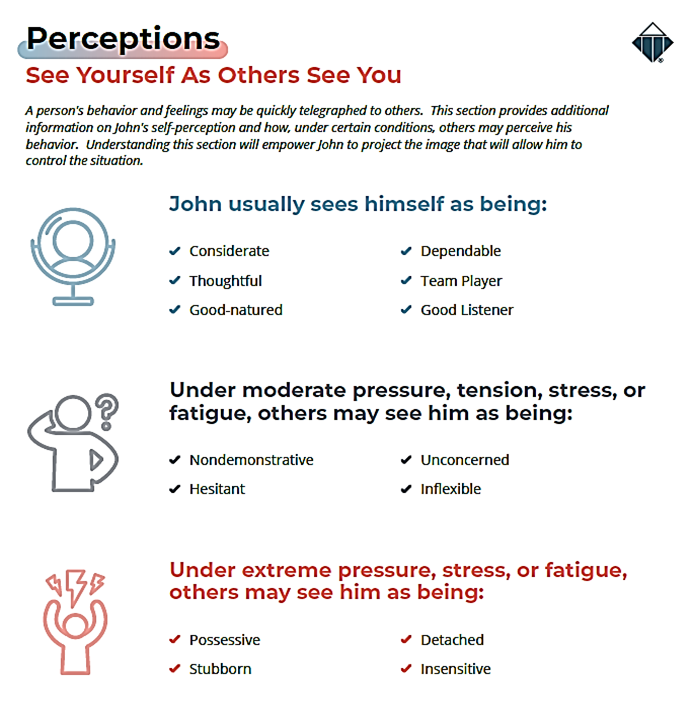
One of the better assessments in helping people deal with their stress is the TriMetrix EQ, an integrated assessment that measures DISC Behaviors, Intrinsic Motivation, and Emotional Intelligence. I’ve reproduced several relevant pages from “John’s” assessment report. As part of my executive coaching, clients build specific action plans to manage their stress, so these report pages are quite insightful.
Whit this report, John and the people he works with can quickly identify when John is under moderate to extreme levels of stress by his behaviors. By developing his self-awareness and self-regulation (two key components of emotional intelligence), John can take remedial action as needed.
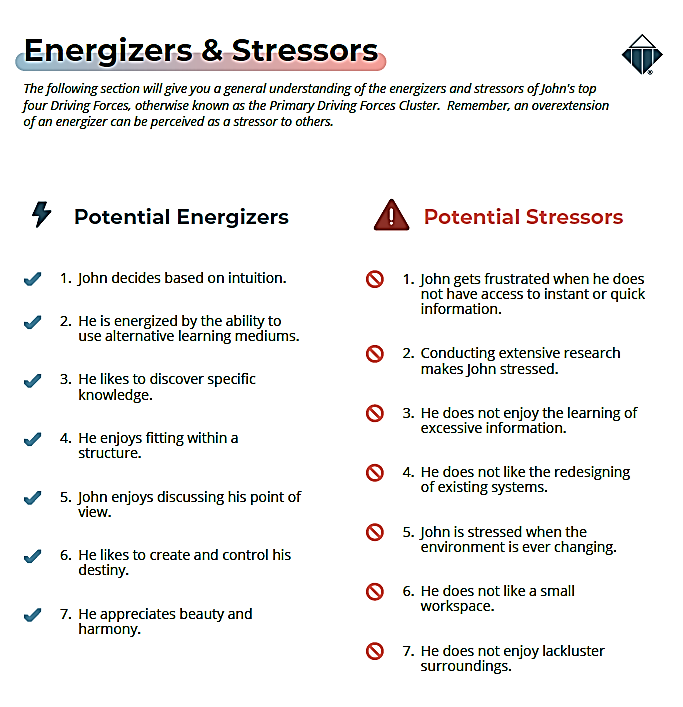
Another useful report page is this one that identifies John’s likely stressors and energizers. This is helpful when John recognizes he is stressed and begins looking for the resons why he is stressed. Conversely, making sure he is doing things that enrgize him can help alleviate his stress.
The TriMetrix EQ report contains more than 60 pages of information to help someone better understand himself or herself, in order to manage stress and unlock one’s greater potential.
Bottom Line
For the past 30 years I continue to learn how stress affects me as well as how my stress affect others. It’s a journey and I’m still a student…
I’ve learned that the most effective people are those who more fully understand themselves, understand other people and situations, and adapt their approach to optimize how they work with each person and in each situation. They are intentional about understanding and coping with their own stress tendencies. And their approach can hove a positive effect on lowering the stress levels the people around them experience.
In part 2 we’ll explore more ways to adapt to situations in ways that reduce stress. Until then, why not develop a list of your own stressors and consider applying the guidance given so far in this article?
About me: Since founding Boyer Management Group 27 years ago, I’ve been blessed to work with some of the world’s top employers by helping them get the most out of their talented people. Thanks to our clients, the company I founded in 1998, Boyer Management Group, was recognized by CEO Monthly Magazine in 2023, 2024, and again in 2025, awarding us their “Most Influential CEO Award” in the executive coaching field. C-Suite Insider named me its 2024 CEO of the Year in Executive Coaching. Our coaching programs produce remarkable results in compressed periods of time. Our extensive leadership development course catalog provides effective skills-building for everyone in the organization, from the new and developing leader to the seasoned C-level executive. BMG boasts one of the most extensive sales and sales management curriculums anywhere, with behavioral assessments to help develop talent. To find out more, please visit us at www.boyermanagement.com or email us at info@boyermanagement.com.


Latest Leadership Posts
Effective People Live the Goldilocks Principles Continue Reading
Don’t Be That Guy Continue Reading
How to Hire the RIGHT Sales Talent – Part 1 Continue Reading

